India is the world’s second-largest consumer of gold jewelry and has been growing rapidly due to urbanization and economic growth. Gold plays a central role in India’s culture; it is present in rituals, wealth, and the status aspect of the culture. Additionally, gold is considered to be a symbol of success in society – there are gold medals, golden jubilee, and golden hour. The way people used to perceive gold in the early 1960s and today has changed substantially due to governmental policies, technological advancement, lifestyle improvements, and more.
With the passage of time and centuries, the use of gold as a material and symbol is not limited to jewellery and artefacts. The materiality of gold is inculcated in the cultures through folklore and elements from nature.It has gained value in society, humans consider gold to be the ultimate achievement. The commercialization of gold has expanded its horizons rooted in electronics to food, beauty, sports, textiles, and a lot more. The desire of human to have gold in their lives is never-ending; be the light from golden hour to golden face masks.
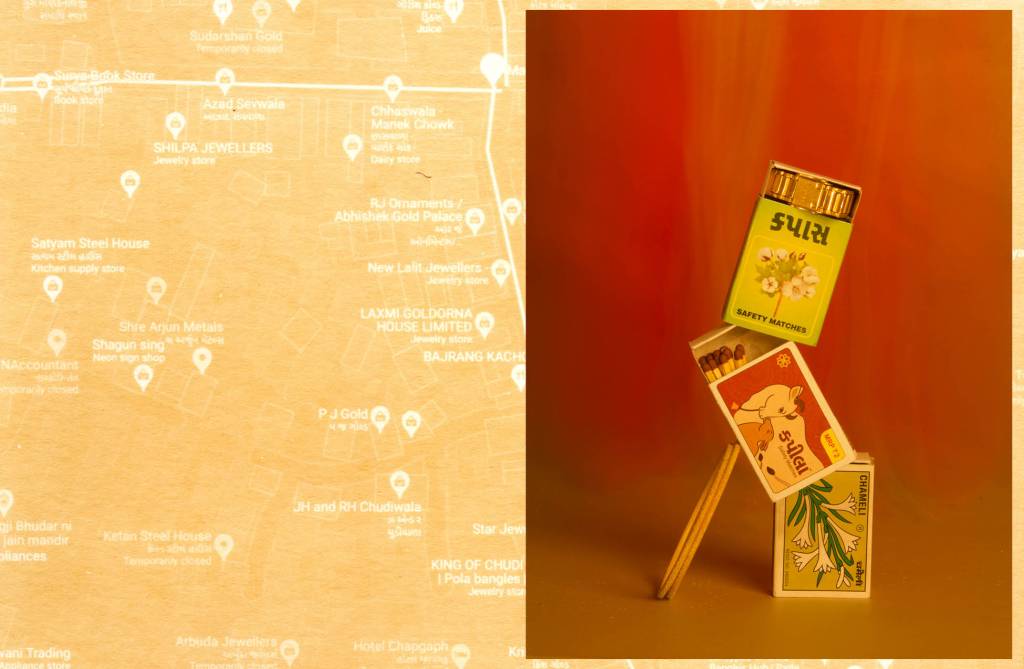
Atomic Number 79 is an ongoing project which looks at gold horizontally; and its role in the political, economical, cultural, social, and geographical context in India. The lanes of project – Bazaar, Years, Jubilee, Dust, and Maps take Manek Chowk in Ahmedabad as the anchor point to tell stories about gold.
Atomic Number 79